Where Exhaust Fan Problems Are Actually Electrical Problems
A fan that's stopped moving air is often a wiring or motor problem wearing a mechanical costume.
September 8, 2026 · 3 min read
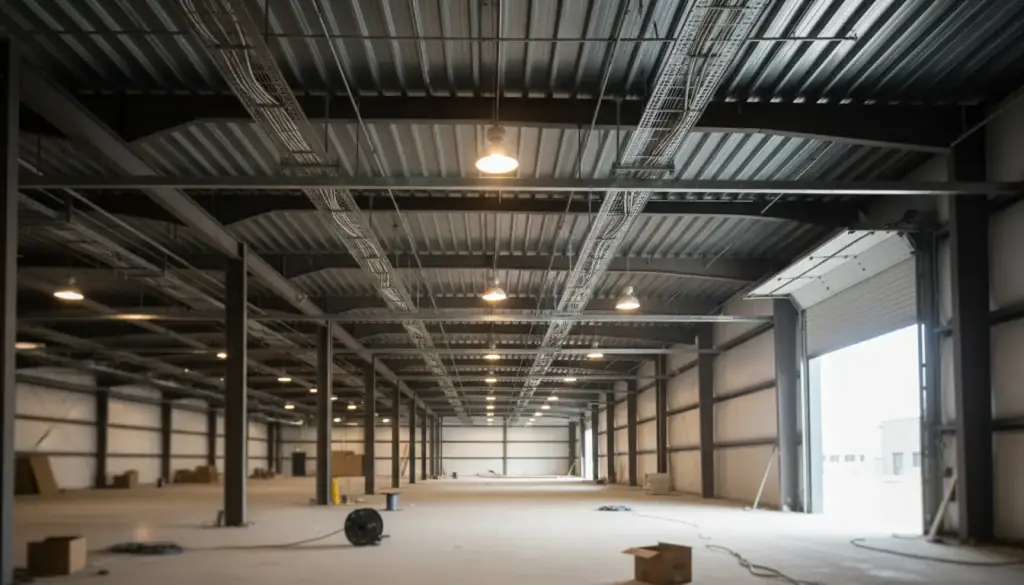
Garages, warehouses, barns, restaurant kitchens, and gyms all depend on moving air out of a space that generates heat, fumes, or grease. It looks like a mechanical problem when a fan stops pulling air the way it should, but the fix is usually electrical.
Where extraction becomes an electrical job
An exhaust fan is only as good as the motor driving it and the wiring feeding that motor. A fan that's spinning slowly, cycling on and off on its own, or not starting at all is rarely a problem with the fan blade or the ductwork. It's more often the motor itself failing, a wiring connection that's degraded, or a circuit that isn't delivering what the motor needs to run at full speed. Treating that as a mechanical fix, cleaning the blades or clearing the duct, misses the actual failure and leaves the space under-ventilated in the meantime.
What wiring a commercial vented hood involves
A commercial vented hood, the kind installed over cooking equipment in a restaurant kitchen, isn't a simple plug-in appliance. It needs a dedicated circuit sized for the exhaust motor, wiring routed correctly around heat sources and grease-prone areas, and in many kitchens an interlock connection so the hood and the makeup air or fire suppression system work together rather than independently. Getting that wiring right the first time matters more in a kitchen than almost anywhere else in a commercial building, because the hood is doing safety work as much as ventilation work.
Motor problems versus wiring problems
A motor problem usually announces itself: grinding, humming without the blade turning, or a fan that trips a breaker every time it starts. A wiring problem is quieter. It can look like a fan that runs but underperforms, one that works intermittently, or one that seems fine until the building's electrical load goes up elsewhere and the fan slows down or cuts out. Both call for the same first step, which is having someone look at the actual electrical supply to the fan rather than assuming the motor itself is worn out.
Replacement and repair aren't always the same job either. A worn motor on an otherwise sound exhaust system is often a straightforward swap. A system that's undersized for the space it's ventilating, or one that was installed with the wrong wiring for the load it's actually carrying, needs a different fix entirely, one that starts with the electrical side rather than the fan hardware itself. Telling the two apart before ordering parts saves a second trip and a second bill for the same underlying problem.
Why the right setup matters across different buildings
Garages, warehouses, and barns generate fumes and heat that need to move out steadily, not just occasionally. Gyms need consistent air turnover for a space that's in constant use. Restaurant kitchens are the highest-stakes case, where an underperforming exhaust system means grease and heat building up faster than the code-required ventilation is designed to handle. In every one of these settings, an exhaust fan that isn't wired and sized correctly for the space ends up running harder, failing sooner, or not doing the job it was installed for at all.
A new build or a renovated space needs the exhaust system planned before the equipment goes in, not fitted around it afterward. Installing a complete exhaust fan system from the start, with the wiring and motor sized for the actual space rather than a generic fixture, avoids the slow underperformance that shows up months later once the fan has been running under more load than it was ever built to carry.
Why this stays commercial-only work
Commercial exhaust systems, especially the ones tied to a restaurant hood or a full warehouse, are a different scale of job from a small fan swap. The circuits are usually dedicated, the equipment is heavier, and getting the wiring wrong has consequences beyond a fan that doesn't spin, from a kitchen that can't legally cook to a warehouse where fumes have nowhere to go. Handling that work day in and day out, rather than as one job among many kinds of electrical work, is what makes the difference between a fan that gets fixed once and one that keeps coming back with the same complaint.
What this covers
This is complete exhaust fan system work: exhaust fan motors, installation, repair, replacement, and wiring for commercial vented hoods, handled by a commercial-only electrical contractor licensed under Texas Electrical Contractor License #17635. Call (972) 620-1995 if a fan in a garage, warehouse, kitchen, or gym isn't pulling the way it used to.
North Town Electric — (972) 620-1995
Call (972) 620-1995More articles
The Three Signs A Commercial Breaker Panel Is Telling You Something
A commercial panel rarely fails without warning. These are the three signs worth acting on before it does.
LED Retrofit Or New Fixtures: How the Decision Actually Gets Made
The fixtures already in the ceiling usually decide the question before budget does.